
Blog
How Political Campaigns Are Targeting Voters Who Don’t Watch the News
With each new election cycle, political campaigns face a growing problem: How to reach voters who don't engage with the political news cycle.
These voters don't watch cable news and don’t subscribe to any digital news outlets. Earned media doesn't reach them. Conventional linear TV and digital ad campaigns built around politics and news content miss them entirely.
We call them Political News Nevers — prospective voters who don’t actively follow election campaigns, don’t engage with traditional political media and generally don’t show up where campaigns have historically found persuadable voters.
Despite their lack of engagement, News Nevers are a vital and often overlooked voting bloc that, when effectively targeted, can swing an election.
It's tempting to dismiss News Nevers as apathetic and therefore not worth the effort, but that's misguided. News Nevers are disengaged from the news cycle, but like all civically minded voters, they still care about election outcomes. They consume less news, but they do get out and vote.
They’re also persuadable, which makes them the exact kind of swing voters who can determine a race — if a candidate can convince them to show up. In a high-turnout election, such as the 2026 midterms, News Nevers is a group every campaign should care about.
Most campaigns optimize media plans around voter registration rolls, bombarding registered voters with campaign ads in the lead-up to Election Day, while disregarding News Nevers entirely. Finding News Nevers first, before the rest of the election field figures out where they've been hiding, gives a candidate a competitive edge.
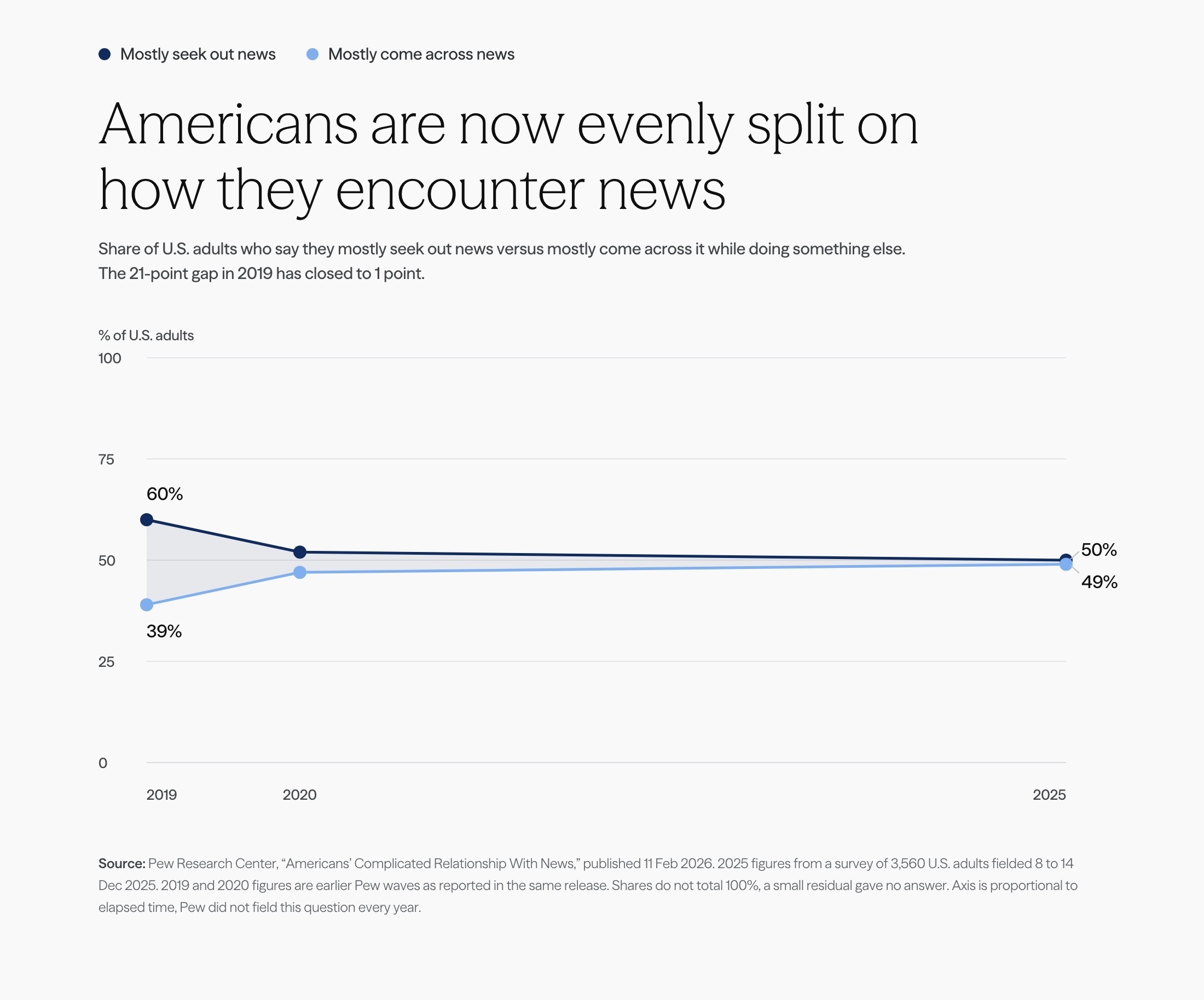
Reaching voters outside the traditional political news cycle is increasingly important as Americans consume less news each year. In 2019, a majority (60%) of Americans mostly consumed news by seeking it out, as opposed to 39% of people who encountered news incidentally, according to a Pew Research study from earlier this year. Now, that split is roughly even.
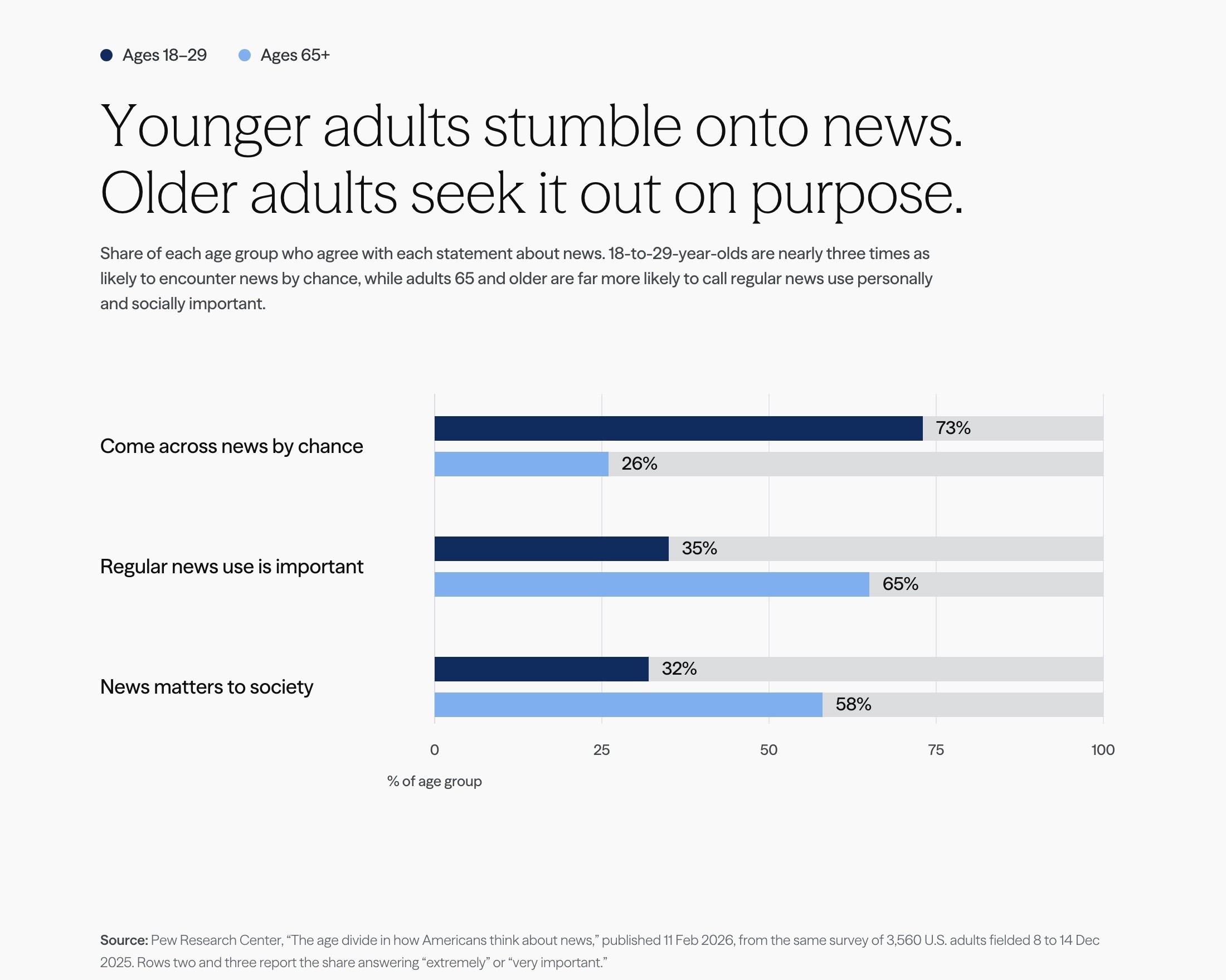
News consumption is even lower for younger voters. Among Americans ages 18 to 29, an overwhelming majority (73%) consume news only when they happen to come across it. Some recent insurgent candidates — such as Zohran Mamdani, now mayor of New York City, and Abdul El-Sayed, who won the Democratic Party nomination for senator from Michigan — have achieved unlikely campaign victories by bypassing traditional political news outlets and reaching young voters directly on social platforms and non-news websites.
News Nevers are a growing group, and the most sophisticated campaigns use connected TV and web data to identify and target them across the web. The targeting is even more precise when a campaign layers in first-party data, which bridges the gap between a voter’s web activity and selections at the ballot box.
Campaigns can also build custom audiences and refine their targeting even further. They can exclude anyone already exposed to their opponent's advertising, so they reach people who haven't been influenced yet and avoid annoying politics-weary voters. Or they can seek out voters exposed to the opposing candidate and try to win them over.
Political campaigns are actively building these strategies, especially in smaller election races where candidates have less money and need to be creative with how they allocate their ad budgets.
The days of reaching these voters by buying ads against mainstream news coverage are rapidly dwindling. The winning campaigns will find clever ways to get in front of News Nevers — a group of hard-to-find but nonetheless valuable swing voters.
Michael Gofman
Share:


