
Blog
The Modern Video Store: What PVOD Data Reveals About How We Watch Movies
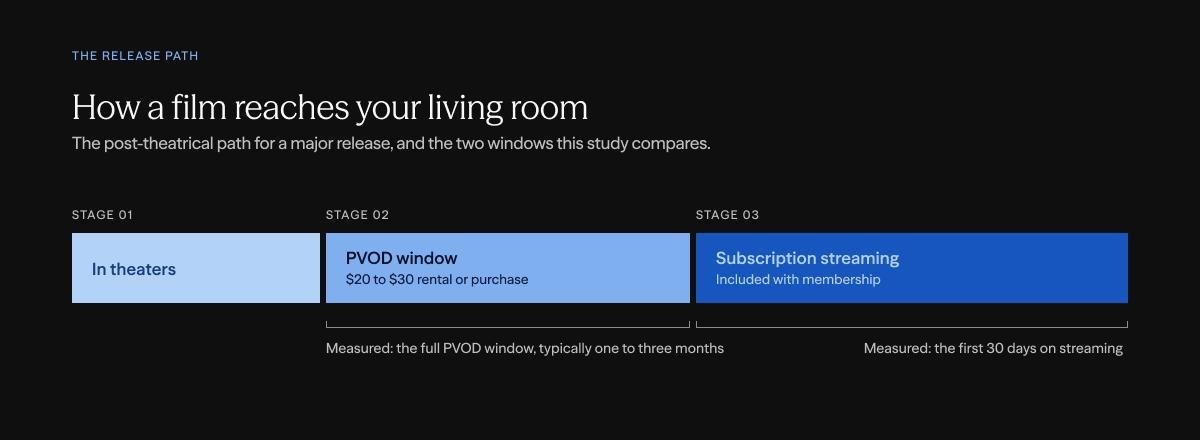
A major film today travels a set path to your living room. It opens in theaters. A few weeks later it becomes a premium video on demand (PVOD) title, a $20 to $30 digital rental or purchase. Then it lands on a subscription streaming service like Max or Disney+, where watching it costs nothing extra.
Every studio has wrestled with the same questions since the streaming wars began: how long should each stop on that path last? Is the PVOD window worth it at all? And are audiences still willing to pay for a single title, the way they did in the video store days?
We used Samba viewership data to find out, following nine of the top box office performers* through two windows: their PVOD run and their first 30 days on streaming. Three things stood out.
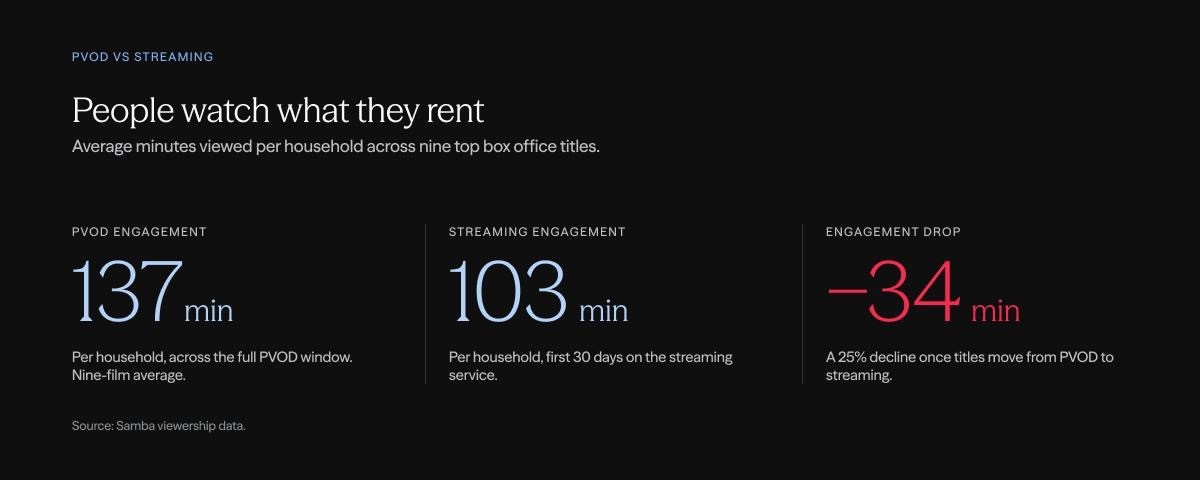
People watch what they rent
Start with engagement, measured in average minutes viewed per household. Across the nine films, households that paid for a PVOD rental averaged 137 minutes, versus 103 minutes for households catching the same titles in their first 30 days on streaming. That is a drop of about 34 minutes, or 25%.
The incentive is obvious. When people spend $20 to $30 to rent or own a film digitally, they watch more of it and are more likely to finish it. That benefits studios beyond the rental fee itself: highly engaged PVOD viewers become word-of-mouth drivers for the streaming release that follows.
Streaming drop-off varies by platform, and Disney+ barely dropped at all
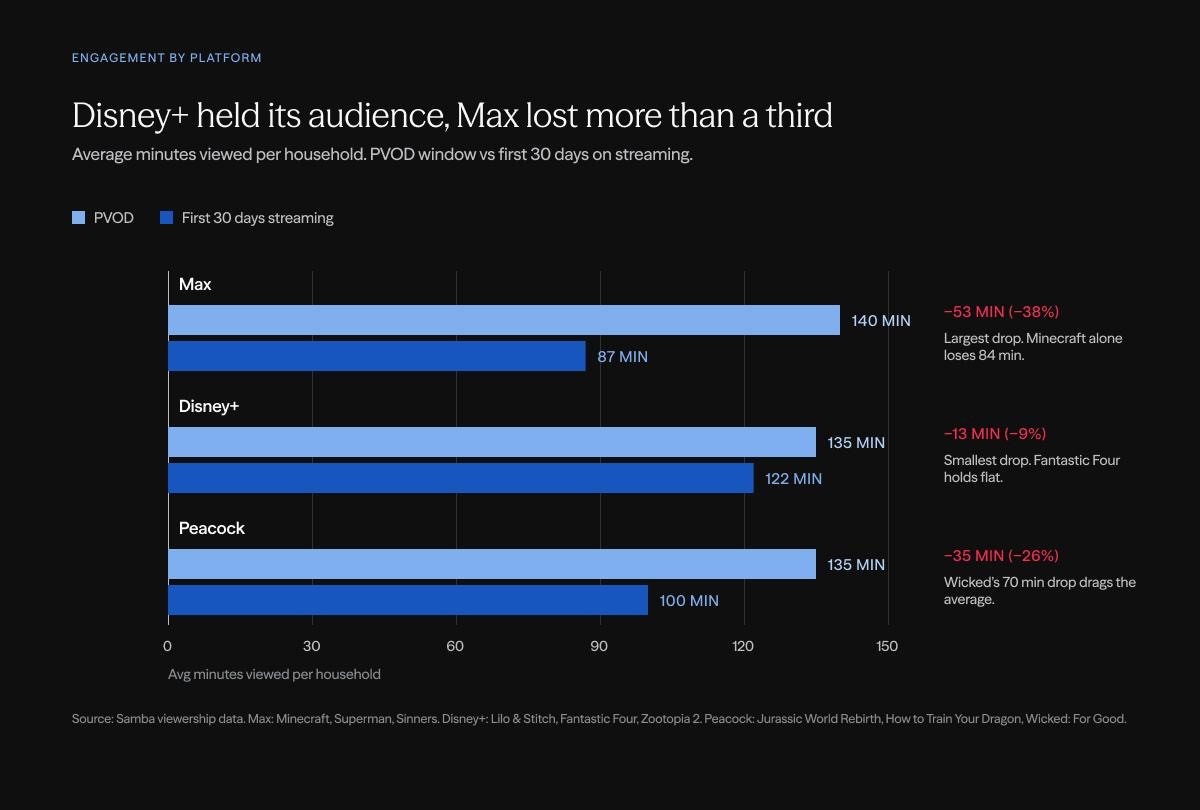
That 34-minute gap is not spread evenly. Average minutes viewed were higher on PVOD for nearly every film, but the size of the drop depended heavily on which platform the film streamed on.
HBO Max had the highest drop in minutes, but Disney+ was the standout streamer for engagement, seeing only a 9% drop thanks mainly to Fantastic Four: First Steps holding almost flat across both platforms. This shows the Disney+ audience was not just sampling titles, they were genuinely committed to what they were watching on the platform.
On HBO Max, the first weekend was the whole story
The third finding is about timing rather than minutes: when do households actually show up in that first streaming month?
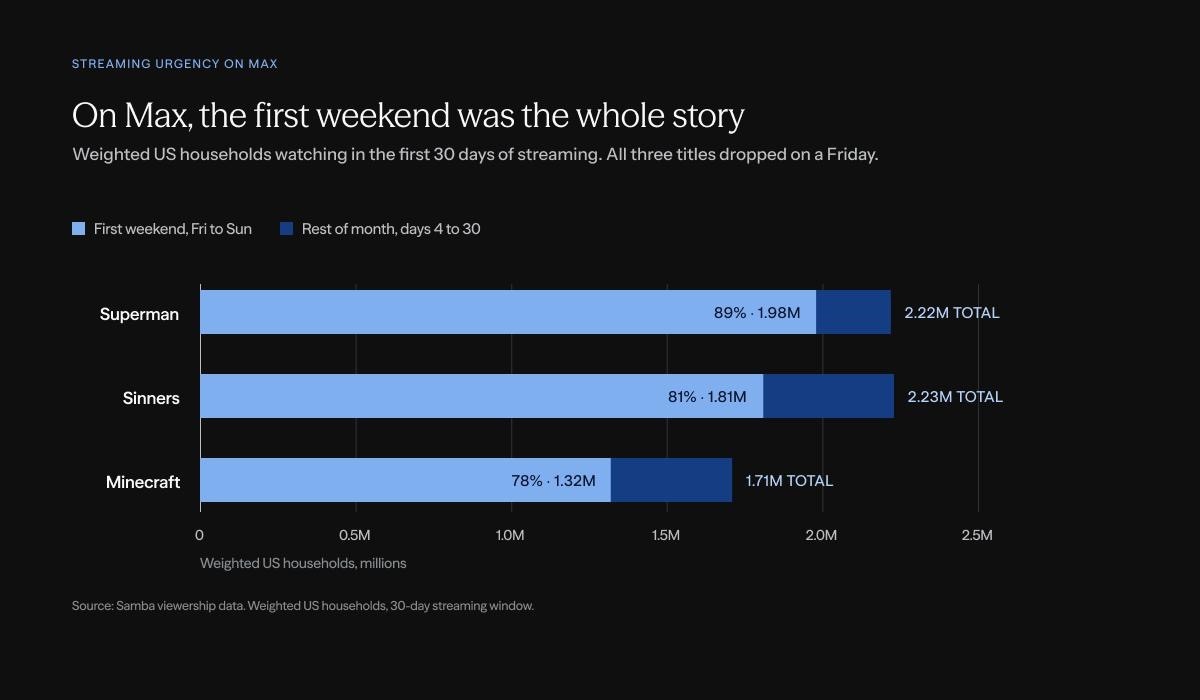
The first week mattered most everywhere, but HBO Max viewers moved with unusual urgency. The three HBO Max titles reached an average of roughly 83% of their 30-day household reach in the first weekend alone. On Disney+ and Peacock, the first-weekend share was closer to 27% and 29%. Every Max title we measured dropped on a Friday, and by Monday its streaming run was essentially done. Superman was the biggest spike: 2.0 million households watched on Friday and Saturday, 89% of its total household viewership for the entire first 30 days.
PVOD behaves differently. Rental viewing spread far more evenly across its one-to-three-month window, with no cliff after opening weekend.
Bottom line: don't count out PVOD
For the past decade the entertainment industry has centered streaming, because subscriber growth moved share price. But as studios keep experimenting with windows and the box office keeps recovering toward pre-pandemic levels, the data argues against skipping the PVOD stop. It still drives massive engagement and better retention than streaming.
Against all odds, the video store is alive and well. Audiences just access it from the comfort of their own homes.
* Minecraft (WBD), Superman (WBD), Sinners (WBD), Lilo & Stitch (Disney), Fantastic Four: First Steps (Disney), Zootopia 2 (Disney), Jurassic World: Rebirth (Universal), How to Train Your Dragon (Universal), and Wicked: For Good (Universal)

Saxony Nielsen
Measurement Partner
Share:


